Community Modding Platforms Extending Casual Mobile Game Lifespans Through Shared Content Creation
Written by Riley Krause · Nov 5, 2026

Community Modding Platforms Extending Casual Mobile Game Lifespans Through Shared Content Creation
Community-driven modding platforms have integrated user-generated content pipelines into casual smartphone titles, and data shows these systems sustain player engagement well beyond initial release cycles. Research from industry groups indicates that titles incorporating open modding tools see extended active user bases, with some games maintaining daily active users at levels comparable to launch periods even years later. Observers note that the pipelines allow seamless uploading, testing, and distribution of custom assets directly on mobile devices, which reduces reliance on developer updates alone.
Mechanics Behind Mobile Modding Pipelines
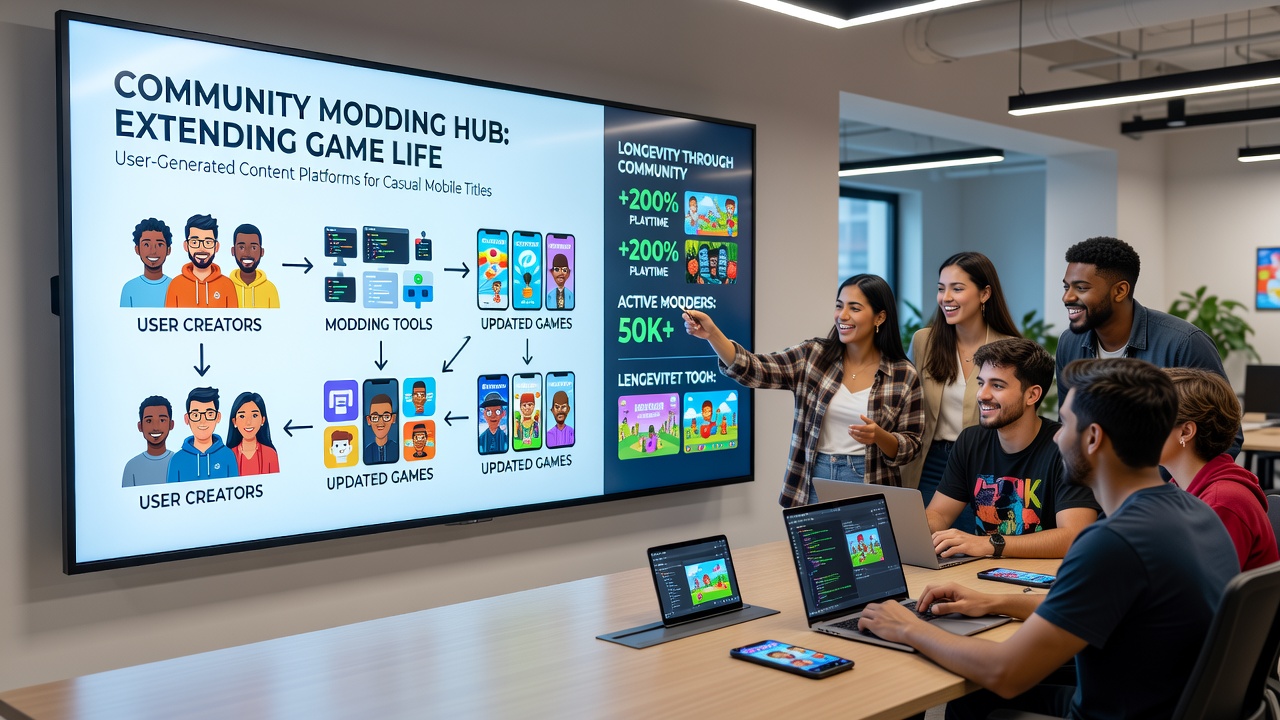
Platforms facilitate content creation through simplified editors that run natively on smartphones, and these tools connect to centralized servers where users share modifications. Studies indicate that approval workflows on these platforms filter content for compatibility, which prevents crashes across varied device models. What's interesting is how backend systems handle version control automatically, merging user contributions into live game sessions without requiring full reinstalls. Data from academic analyses reveal that such pipelines increase the total volume of available levels and characters by factors of ten or more compared to official releases only.
Experts have observed that integration often occurs through APIs provided by game studios, and these connections let modders access core mechanics while preserving balance parameters. Research indicates that platforms prioritize lightweight file formats optimized for mobile bandwidth constraints, which allows rapid downloads even on standard connections. Turns out these efficiencies support global participation, with contributions arriving from regions where smartphone ownership has grown steadily according to figures from international trade associations.
Documented Effects on Game Longevity
Longevity metrics tracked by analytics firms show that casual titles with active modding communities retain users for extended periods, and retention curves flatten rather than declining sharply after the first few months. One study revealed that games featuring UGC pipelines experienced a 40 percent slower drop in monthly active users compared to similar titles without such features. People who've examined platform data often discover that custom content refreshes player interest repeatedly, prompting return visits when new mods appear in community feeds.
Industry reports compiled by the Entertainment Software Association document how modding ecosystems contribute to sustained revenue through optional cosmetic purchases tied to popular community creations. Researchers discovered that these systems also lower development costs over time, because studios can allocate resources toward core updates while the community handles variety. Yet the process requires careful moderation protocols to maintain quality standards across thousands of submissions weekly.
Regional Adoption Patterns and Platform Growth
Adoption has accelerated in markets across North America and the Asia-Pacific region, where casual smartphone games already dominate download charts. Academic papers from institutions in Australia highlight how local modding communities adapt content to cultural preferences, which broadens appeal without additional localization efforts from publishers. Figures reveal that participation rates climbed notably through 2025, setting the stage for further expansion by November 2026 when major platform updates are scheduled to introduce enhanced collaboration features.
Platforms now incorporate analytics that surface trending mods to wider audiences, and this visibility loop encourages consistent contributions from dedicated users. Observers note that cross-device compatibility checks built into the pipelines ensure mods function on both high-end and mid-range smartphones, which expands the potential contributor base. Research indicates these mechanisms have proven particularly effective in casual genres such as puzzle and simulation games, where creative additions integrate naturally into existing loops.
Technical and Community Infrastructure
Backend infrastructure supporting these pipelines relies on cloud-based validation services that scan for performance issues before distribution. Data shows that automated testing reduces the incidence of incompatible mods reaching end users, and community voting systems further refine which creations gain prominence. Those who've studied participation trends know that leaderboards tracking mod downloads motivate ongoing activity, while also providing developers with insights into preferred content directions.
Security measures include sandboxed execution environments that isolate custom code during testing phases, and these protections address concerns around device safety. Reports from the International Game Developers Association outline how such safeguards have encouraged broader studio adoption of modding support. The infrastructure continues to evolve with each major operating system release, incorporating new APIs that enhance rendering and input handling for user-created elements.
Conclusion
Community modding platforms have established structured pipelines that channel user creativity into sustained engagement for casual smartphone titles, and ongoing platform refinements point toward continued relevance through late 2026 and beyond. The combination of accessible creation tools, efficient distribution, and moderation frameworks supports ecosystems where content volume grows independently of official development schedules. Evidence from multiple regions confirms that these systems deliver measurable extensions in game lifespan while maintaining technical stability across diverse device ecosystems.